

Hey there! As a supplier of C26800, I often get asked about the surface finish of C26800 after machining. So, I thought I'd write this blog to share some insights on this topic.
First off, let's talk a bit about C26800. It's a type of brass alloy, which is a combination of copper and zinc. C26800 is known for its excellent formability, corrosion resistance, and good mechanical properties. It's widely used in various industries, such as electrical, plumbing, and decorative applications.
When it comes to machining C26800, the surface finish you end up with can vary depending on several factors. One of the most important factors is the machining process itself. There are different machining methods like turning, milling, drilling, and grinding, and each of them can have a different impact on the surface finish.
Turning
Turning is a common machining process where a cutting tool removes material from a rotating workpiece. When turning C26800, the surface finish largely depends on the cutting parameters. The speed at which the workpiece rotates (cutting speed), the feed rate (how fast the cutting tool moves along the workpiece), and the depth of cut all play a role.
If you use a high cutting speed and a small feed rate with a sharp cutting tool, you're likely to get a smoother surface finish. On the other hand, a low cutting speed and a large feed rate might result in a rougher surface. The surface finish after turning can typically range from a relatively smooth finish with a surface roughness (Ra) of around 0.8 - 3.2 micrometers.
Milling
Milling involves using a rotating multi - point cutting tool to remove material. Similar to turning, the cutting parameters are crucial. The type of milling cutter also matters. For example, a fine - tooth end mill can produce a better surface finish compared to a coarse - tooth one.
In milling C26800, the surface finish can be affected by the direction of the cut. Climb milling, where the cutting tool moves in the same direction as the rotation of the workpiece, often gives a better surface finish than conventional milling. The surface roughness after milling can be in the range of 1.6 - 6.3 micrometers, depending on the settings.
Drilling
Drilling is used to create holes in the C26800 workpiece. The quality of the drill bit and the drilling parameters are important. A sharp drill bit with the right point angle and helix angle will help in getting a better surface finish inside the hole.
The feed rate and the spindle speed during drilling also impact the surface. If the feed rate is too high, it can cause the drill bit to chatter, resulting in a rough surface inside the hole. The surface finish inside the drilled holes can have a surface roughness of around 3.2 - 12.5 micrometers.
Grinding
Grinding is a finishing process that can achieve a very smooth surface finish. It uses an abrasive wheel to remove small amounts of material. When grinding C26800, the grit size of the grinding wheel is a key factor. A finer grit wheel will produce a smoother surface.
The grinding parameters, such as the wheel speed, the feed rate, and the depth of cut, need to be carefully controlled. Grinding can achieve a surface roughness as low as 0.1 - 0.8 micrometers, which is extremely smooth.
Another factor that affects the surface finish of C26800 after machining is the coolant used. Coolants help in reducing heat and friction during the machining process. They can also flush away the chips produced during machining. Using the right coolant can improve the surface finish by preventing built - up edge on the cutting tool and reducing the chances of thermal damage to the workpiece.
The material condition of the C26800 before machining also matters. If the material has inclusions or internal stresses, it can affect the surface finish. For example, if there are hard inclusions in the alloy, the cutting tool might experience uneven wear, leading to a rougher surface.
Now, let's compare C26800 with some other copper alloys in terms of surface finish after machining. For instance, UNS C11000 Copper is a pure copper alloy. It has good machinability, but its surface finish characteristics can be different from C26800. Pure copper is softer than C26800, so it might be more prone to smearing during machining, which can affect the surface finish.

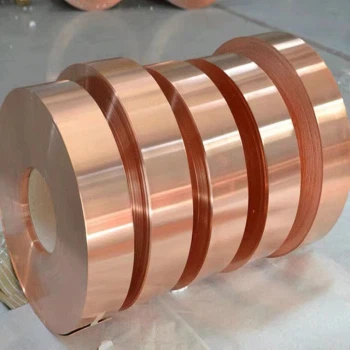
C17300 Beryllium Copper and C17500 Beryllium Copper are high - strength copper alloys. They are known for their excellent mechanical properties. However, their machining can be a bit more challenging compared to C26800. The beryllium content in these alloys can make the cutting tools wear faster, and achieving a good surface finish might require more precise machining parameters.
In some applications, the surface finish of C26800 after machining is crucial. For example, in electrical connectors, a smooth surface finish can improve the electrical contact and reduce the chances of corrosion. In decorative applications, a good surface finish enhances the aesthetic appeal of the product.
If you're involved in a project that requires C26800 and you're concerned about the surface finish after machining, we can work together to ensure that you get the best results. We have a team of experts who can provide advice on the optimal machining parameters and help you choose the right cutting tools and coolants.
Whether you need a rough surface finish for a specific application or a super - smooth finish for a high - end product, we can assist you. Our C26800 alloy is of high quality, and we can supply it in various forms, such as sheets, rods, and tubes.
If you're interested in purchasing C26800 for your project, don't hesitate to reach out. We're here to answer all your questions and discuss your specific requirements. We can also provide samples so that you can test the material and see the surface finish for yourself.
So, if you're looking for a reliable C26800 supplier who can help you achieve the desired surface finish after machining, contact us for a procurement discussion. We're eager to work with you and make your project a success.
References
- "Machining of Metals: An Introduction" by John A. Schey
- "Copper and Copper Alloys Handbook" published by ASM International


