


Titanium Alloy
Your Leading Titanium Alloy Supplier
Xi'an Baohui Steel Co., Ltd. is located in the ancient capital of China, Xi'an. We are a leading manufacturer and supplier of specialty metal materials. Our focus is on providing high-performance stainless steel, titanium alloys, copper alloys, aluminum alloys, and nickel alloys for our customers. Each batch undergoes chemical analysis, mechanical testing, and non-destructive testing to ensure internal and external quality.






Why Choose Us?
Advanced Production Facilities
We operate with modern heating furnaces, cold-rolling and cold-drawing mills, hot-extrusion presses, annealing lines, and full pickling/passivation systems to ensure stable and accurate tube and alloy processing.
Strict Quality Control
All finished tubes and alloy products are tested using eddy-current, ultrasonic, and direct-reading spectrometry to guarantee consistent mechanical performance and full compliance with customer specifications.
Large Capacity and Fast Delivery
With an annual capacity of over 3 million tons and a well-organized stock system, we can quickly support customized orders and meet tight delivery schedules.
Strong Production Market
Our products are exported to over 100 countries, including major markets in the US, Germany, France, Japan, Korea, Brazil, Italy, Turkey, and Southeast Asia, earning long-term trust from global industrial buyers.
Parameters of Titanium Alloy
|
Parameter |
Details |
|
Outside Diameter |
6mm – 200mm (0.24" – 8") |
|
Wall Thickness |
0.5mm – 20mm (0.02" – 0.79") |
|
Length |
1000mm – 12000mm (39" – 472") (Custom lengths available) |
|
Surface Finish |
Pickled, Polished, Annealed, As-Drawn |
|
Standard |
ASTM B338, ASME SB338, ASTM B337, TEMA, HEI |
Types of Titanium Alloy
Ti-6Al-4V ELI Titanium Plate
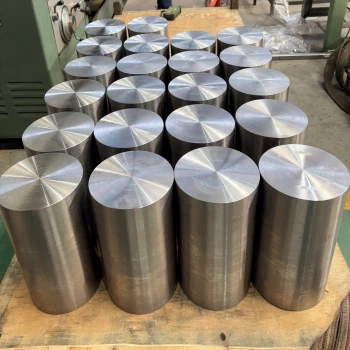
Titanium alloy Ti-6Al-4V products in various forms, including bar, sheet, plate, tube, and wire. This alloy provides the perfect balance of strength, ductility, and corrosion resistance, making it suitable for the most demanding environments.
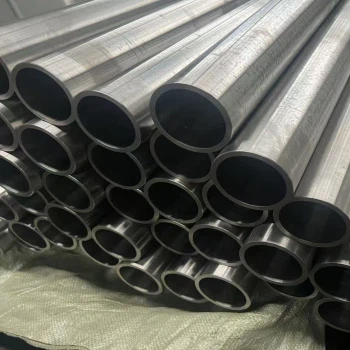
ASTM B338 Grade 2 Titanium Tubing
ASTM B338 Grade 2 Titanium Tubing in various grades, optimized for heat exchanger and condenser applications. These pipes provide outstanding resistance to corrosion from seawater, chlorides, and other aggressive media, along with excellent heat transfer properties.
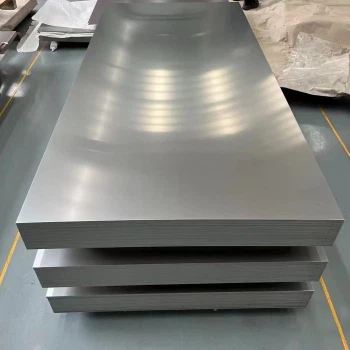
ASTM B265 Gr2 Titanium Plate
ASTM B265 Titanium Plates covers the requirements for titanium and titanium alloy flat products, including sheets and plates. Titanium offers an exceptional strength-to-weight ratio, outstanding corrosion resistance, and excellent biocompatibility.
Titanium Alloy: Available Grades
|
Grade |
Common Name |
Key Characteristics |
|
Grade 1 |
CP Titanium |
Excellent formability, highest corrosion resistance |
|
Grade 2 |
CP Titanium |
Standard grade, good balance of strength and ductility |
|
Grade 3 |
CP Titanium |
Medium strength, good corrosion resistance |
|
Grade 4 |
CP Titanium |
High strength, excellent corrosion resistance |
|
Grade 5 |
Ti-6Al-4V |
Most common alloy, high strength, heat treatable |
|
Grade 7 |
Ti-0.15Pd |
Enhanced corrosion resistance with palladium addition |
|
Grade 9 |
Ti-3Al-2.5V |
Medium strength, excellent fabricability |
|
Grade 12 |
Ti-0.3Mo-0.8Ni |
Excellent corrosion resistance, high temperature stability |
|
Grade 16 |
Ti-0.05Pd |
Enhanced corrosion resistance with palladium addition |
|
Grade 17 |
Ti-0.05Pd |
Enhanced corrosion resistance with palladium addition |
Titanium alloys are composed of titanium combined with various key alloying elements to enhance their properties:
• Aluminum (Al): Increases strength and temperature resistance.
• Vanadium (V): Boosts strength, hardness, and fatigue resistance.
• Molybdenum (Mo): Enhances strength and wear resistance at high temperatures.
• Chromium (Cr): Improves corrosion resistance and hardness.
• Zirconium (Zr): Adds strength and improves corrosion and oxidation resistance.

Customization Options
|
Material Grade |
Pure Titanium / High-strength Titanium Alloys |
|
Dimensions |
Multiple options or customization |
|
Surface / Finishing Treatment |
Options such as polished, pickled / acid-washed, sand-blasted, coated, maybe anodized or other surface finishes (depending on alloy) |
|
Processing Type |
Seamless pipe / Welded pipe / Tube / Bar / Custom-shaped sections, etc. |
Application Industries of Titanium Alloy
Aerospace Engineering with Titanium Alloys
Aerospace components experience some extreme conditions, and titanium alloys enable manufacturers to fabricate parts that can withstand a lot of abuse. At the same time, parts made with these metals contribute much less weight to the overall construction compared to other materials. This is critical for ensuring the highest levels of performance and efficiency. Some examples of parts made from titanium alloys include wings, jet engine components and military armor.
Automotive Innovations with Titanium Alloys
Like the aerospace industry, the automotive sector is concerned with creating parts that can stand up to extreme heat and heavy use without deformation. This is where titanium alloys have allowed auto engineers and designers to bring their visions to life without compromise. From durable electric battery enclosures to high-durability engine valves, these alloys are essential for making modern vehicles as strong and dependable as they can be.
Biomedical Applications of Titanium Alloys
One of the most important qualities of titanium alloys is that they are non-reactive. This makes these metals exceptionally biocompatible. This is why they are used frequently for medical tools, implants and prosthetics. Their non-magnetic nature means they will not interact with MRI equipment, making them safe for use as implants such as hip and knee replacements.
Titanium Alloys in Chemical Processing
The chemical processing industry depends on titanium alloys because they provide exceptional resistance to heat as well as corrosion. This is why they are used for fabricating critical elements of processing infrastructure such as heat exchangers, pipelines and pressure vessels. Operators count on these to provide long lifespans and consistent performance even under intense heat and pressure.
High-Temperature and Nuclear Applications
Titanium's resistance to extreme environmental conditions and external forces also make its alloys extremely valuable in other industries such as nuclear power generation. Their ability to survive under intensive pressures and temperatures means they are found often in components for nuclear reactors because they ensure the safety and efficiency of these systems.
Sports Equipment and Lightweight Materials
The strength and durability of titanium alloys, combined with their lightweight properties, make them the material of choice for a wide range of athletic equipment. This is especially true for components such as bicycle frames, ice skate blades and golf club heads. Many professional athletes prefer equipment made with titanium alloys because they're more comfortable to use, last longer than other materials and enhance their performance during competition.
Surface Treatment Methods of Titanium Alloy
Shot peening is one form of treatment whereby the floor of titanium is bombarded with small spherical particles. It introduces layers of compressive stress onto the material treated. These treatments substantially improve the mechanical resistance of titanium to fatigue, which is quite highly exploited in aerospace and different automotive industries.
Anodizing is a different kind of chemical treatment that improves corrosion resistance in titanium while offering cosmetic options. The process of anodizing develops colors on the titanium parts, ranging from blues, purples, golds, and greens, by using a controlled oxide layer. This technique does not only have use for decorative purposes but also finds its application industrially when both corrosion resistance and appearance become essential.
The passivation process is a chemical treatment with acids to enhance the naturally occurring oxide layer on titanium. This finish enhances the corrosion resistance of the material, which makes it more reliable in harsh conditions, like saltwater or an industrial chemical environment. Passivation finds its common applications in marine engineering and biomedical industries.
Nitriding is one of the many diffusion treatments where elements like nitrogen or carbon are diffused at high temperature into the surface of titanium. These surface-hardening treatments increase the surface hardness, rendering titanium resistant to damage and thereby fitting for high-stress applications in aerospace and heavy industry.
Our Certificates


① Raw Material Inspection – All incoming materials are checked for quality and specification accuracy before production.
② In-Process Inspection – Critical production stages are monitored to maintain stable processes and consistent product quality.
③ Final Product Inspection – Finished products are tested to verify performance and ensure compliance with customer requirements.
④ Pre-Shipment Inspection – Dimensions, surface quality, packaging, and documents are checked prior to dispatch.
⑤ We welcome inspections from any accredited third-party agency upon request.
⑥ We provide cutting, machining, surface finishing, and heat-treatment services to support customized orders.
Packaging & Transportation
Packaging Details:The standard export packaging, plastic film, or craft paper is covered. Awooden case or wooden pallet is adopted to protect products from damage during delivery. In addition, clear labels are tagged on the outside of the packages for easy identification of the products and quality information.
