



Steel Pipe
Your Leading Steel Pipe Supplier
Xi'an Baohui Steel Co., Ltd. is located in the ancient capital of China, Xi'an. We are a leading manufacturer and supplier of specialty metal materials. Our focus is on providing high-performance stainless steel, titanium alloys, copper alloys, aluminum alloys, and nickel alloys for our customers. Each batch undergoes chemical analysis, mechanical testing, and non-destructive testing to ensure internal and external quality.


Why Choose Us?
Advanced Production Facilities
We operate with modern heating furnaces, cold-rolling and cold-drawing mills, hot-extrusion presses, annealing lines, and full pickling/passivation systems to ensure stable and accurate tube and alloy processing.
Strict Quality Control
All finished tubes and alloy products are tested using eddy-current, ultrasonic, and direct-reading spectrometry to guarantee consistent mechanical performance and full compliance with customer specifications.
Large Capacity and Fast Delivery
With an annual capacity of over 3 million tons and a well-organized stock system, we can quickly support customized orders and meet tight delivery schedules.
Strong Production Market
Our products are exported to over 100 countries, including major markets in the US, Germany, France, Japan, Korea, Brazil, Italy, Turkey, and Southeast Asia, earning long-term trust from global industrial buyers.
Parameters of Steel Pipe
|
Material Grade |
Q235 / Q345 / S235 / S275 / S355 / ASTM A53 / A106 |
|
Outer Diameter (OD) |
1/2"–24"(21.3–610 mm) |
|
Wall Thickness (WT) |
1.5–20 mm |
|
Length |
1–12 m |
|
Surface Treatment |
Black / Oiled / Galvanized / 3PE / 3PP / Painted |
|
Tolerance |
OD: ±0.5–1% / WT: ±10% |
|
Ends |
Plain End / Beveled End / Threaded |
|
Welding Type |
ERW / LSAW / SSAW |
|
Standard |
ASTM / EN / ISO / DIN / BS |
|
Packing |
Bundles with steel strips + waterproof wrapping |
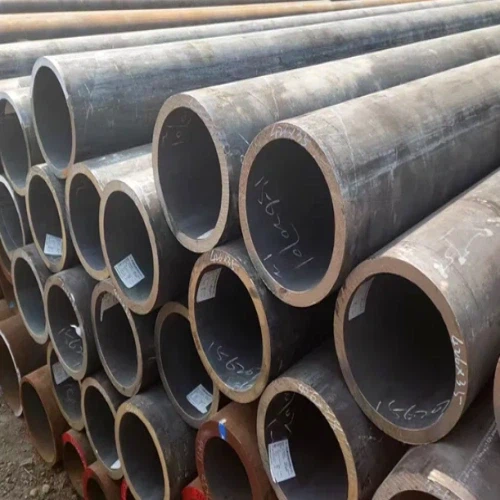
High strength:
Steel pipe have high tensile strength and compressive strength, can withstand greater pressure and load, and have excellent stability and safety in some applications.
Good toughness:
It has good toughness and can withstand a certain degree of deformation without breaking or breaking.
Excellent corrosion resistance:
The surface of the steel pipe is enhanced with various special treatments to prevent corrosion in harsh environments such as moisture, acid and alkali, thereby giving it a longer service life.
Good processability:
Steel pipe can be processed into various shapes and sizes through welding, bending, stretching, cutting and other processes to meet different design needs, making them more flexible and suitable for more fields.
Good thermal conductivity and electrical conductivity:
The thermal conductivity of steel pipes is good, and there are a large number of free electrons inside, which can transfer heat and current well.
Customization Options
|
Material Grade |
Q235–Q345 / S235–S355 / ASTM A53–A106 |
|
Diameter Range |
21.3–610 mm/or customized |
|
Wall Thickness |
1.5–20 mm/or customized |
|
Length |
1–12 m/or customized |
|
Surface Finish |
Black, Oiled, Galvanized, 3PE/3PP, Painted |
|
Pipe Ends |
Plain, Beveled, Threaded (NPT/BSP) |
|
Welding Process |
ERW / LSAW / SSAW |
|
Packaging |
Steel strips + waterproof wrapping |
Application Industries of Steel Pipe
THE CONSTRUCTION INDUSTRY
Since steel pipe is both durable and lightweight, it's commonly utilized by the construction industry in commercial and residential buildings, as well as in industry sectors including power, water, sewer, manufacturing and more. Steel pipe is also a top choice in the construction industry because it's resistant to rust and corrosion, meaning that it won't require frequent repairs or replacement. This is especially important in water, plumbing and electrical systems, since leaks or breaks in the steel pipe can be both dangerous and costly.
THE OIL AND GAS INDUSTRY
Steel pipe is ideal for use in extreme conditions such as corrosive environments, low and high temperatures and high pressure. For this reason, steel pipe is prevalent in the oil and gas industry, especially in pipes like gathering lines (the tubes that transport oil or gas from the producing area to a storage facility or larger main pipeline), and pipe trunk lines (the welded, large-diameter steel pipes that are used to transport natural gas over long distances). Because of steel pipe's durability and versatility, it can stand up to the unique needs of the oil and gas industry.
THE SHIPBUILDING INDUSTRY
The strength of steel makes it a great option for ship building since it withstands vibrations, shock and high pressure. Unlike other metals, steel with bend rather than break in extreme conditions, which means it's less likely to crack or leak. In the shipbuilding industry, steel pipe is designed and manufactured for the boilers, super heaters and pressure systems of a ship.
THE TEXTILE INDUSTRY
The versatility of steel pipe makes it a popular choice in the textile industry for the production of bale openers, mixers, carding machines, spinning machines, winding machines and texturing machines.
THE AGRICULTURAL INDUSTRY
Steel pipe is frequently used in agricultural fittings due to its durability and ability to withstand pressure. Steel is also sometimes mixed with carbon to create a more lightweight yet sturdy agricultural fitting. Farmers and other agricultural organizations use steel pipe in dozens of applications, including tractor engines, grain elevators, field drainage systems, fertilizer applications, vent pipe systems and more.
INDUSTRIAL APPLICATIONS
Steel pipe is a common choice in manufacturing facilities, warehouses and other industrial locations because it's rust-proof and doesn't corrode, affording facilities a lifetime of dependable use. Round steel tubing is often used to transport liquids or gas from one area of an industrial facility to another, as well as in the construction of industry structures itself.
ADDITIONAL APPLICATIONS
In addition to the above listed, steel pipe is commonly found in:
• Power Plants
• Diary and Food Processing Facilities
• Modern Architecture
• Chemical Facilities
• Water Treatment Facilities
• Synthetic Fiber Production
• Desalination
• Energy Industries
Heat Treatment Process of Steel Pipes
Spheroidizing: Prolonged heating of iron-based alloys at a temperature slightly below the critical temperature range followed by relatively slow cooling,usually in air. Small objects of high carbon steel are more rapidly spheroidized by prolonged heating to temperatures alternately within and slightly below the critical temperature range.The purpose of this heat treatment is to produce a globular condition of the carbide.
Normalizing: Heating iron-base alloys to temperatures approximately 50℃above the critical temperature range followed by cooling in air to below the range.The purpose is to put metal structure in a normal condition by removing all internal strains and stresses given to the metal during some processing operation.
Annealing is a comprehensive term applied to heat treatments which may be used to remove stresses;induce softness;alter ductility, toughness, electrical, magnetic,or other physical properties,refine the crystalline structure; remove gases;or produce a microstructure. The temperature of the treatment and the rate of cooling depend upon the object of the treatment and the composition of the material being heat treated.
Hardening is the heating and quenching of certain iron-base alloys from a temperature either within or above the critical temperature range. The temperature of the heating and the length of time at this temperature, or "soaking period", depend upon the composition of the material.The quenching media used may depend upon the composition, hardness desired,and the complexity of the design.
Tempering is the reheating after hardening of iron-base alloys to some temperature below the critical temperature range, followed by any desired rate of cooling. The purpose of tempering is the removal of strains, and the reduction of hardness and brittleness.
Our Certificates


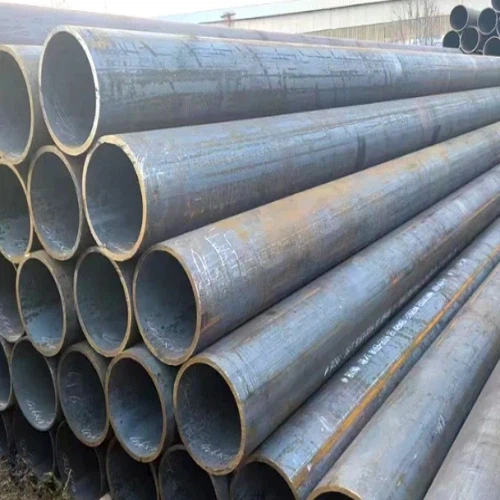
① Raw Material Inspection – All incoming materials are checked for quality and specification accuracy before production.
② In-Process Inspection – Critical production stages are monitored to maintain stable processes and consistent product quality.
③ Final Product Inspection – Finished products are tested to verify performance and ensure compliance with customer requirements.
④ Pre-Shipment Inspection – Dimensions, surface quality, packaging, and documents are checked prior to dispatch.
⑤ We welcome inspections from any accredited third-party agency upon request.
⑥ We provide cutting, machining, surface finishing, and heat-treatment services to support customized orders.
Packaging & Transportation
Packaging Details:The standard export packaging, plastic film, or craft paper is covered. Awooden case or wooden pallet is adopted to protect products from damage during delivery. In addition, clear labels are tagged on the outside of the packages for easy identification of the products and quality information.
