

As a supplier of UNS C17000, I've witnessed firsthand the importance of understanding the various factors influencing its performance. One such critical factor is the pH level of the environment in which this alloy operates. In this blog, we'll delve into the effects of pH on the corrosion resistance of UNS C17000, exploring the underlying mechanisms and practical implications for different applications.
Understanding UNS C17000
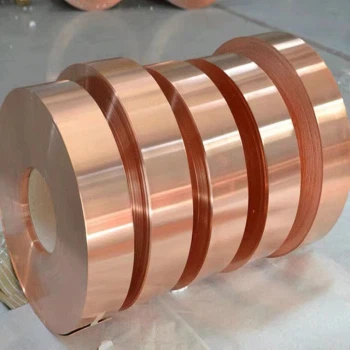
UNS C17000, also known as C17000 Beryllium Copper, is a precipitation-hardening alloy that combines high strength, excellent electrical and thermal conductivity, and good corrosion resistance. It contains approximately 1.6 - 1.79% beryllium, along with other elements such as cobalt and nickel, which contribute to its unique properties. This alloy is widely used in industries such as aerospace, electronics, and automotive, where its combination of strength and conductivity is highly valued.
The Basics of Corrosion and pH
Corrosion is a natural process that involves the deterioration of a metal due to chemical reactions with its environment. The rate and mechanism of corrosion can be significantly influenced by the pH of the surrounding medium. pH is a measure of the acidity or alkalinity of a solution, with values ranging from 0 (highly acidic) to 14 (highly alkaline). A pH of 7 is considered neutral.
In general, metals tend to corrode more rapidly in acidic environments than in alkaline or neutral ones. This is because acidic solutions contain a higher concentration of hydrogen ions (H+), which can react with the metal surface to form metal ions and hydrogen gas. The reaction can be represented by the following general equation:
[M + nH^+ \rightarrow M^{n+}+\frac{n}{2}H_2]
where M is the metal and (M^{n+}) is the metal ion.
On the other hand, in alkaline environments, the presence of hydroxide ions (OH-) can react with metal ions to form metal hydroxides, which may form a protective layer on the metal surface, reducing the corrosion rate.
Effect of pH on the Corrosion Resistance of UNS C17000
The corrosion behavior of UNS C17000 is complex and depends on several factors, including the specific composition of the alloy, the presence of other elements in the environment, and the temperature. However, the pH of the environment plays a crucial role in determining the corrosion rate.
Acidic Environments
In acidic solutions, the corrosion rate of UNS C17000 generally increases with decreasing pH. The high concentration of hydrogen ions in acidic solutions can attack the alloy surface, leading to the dissolution of the metal. The beryllium and copper in the alloy can react with the hydrogen ions to form metal ions and hydrogen gas.
For example, copper can react with hydrogen ions in the following way:
[Cu + 2H^+ \rightarrow Cu^{2+}+H_2]

The presence of other elements in the alloy, such as cobalt and nickel, can also affect the corrosion behavior. These elements can form protective oxide layers on the surface of the alloy, which can slow down the corrosion process to some extent. However, in highly acidic solutions, these oxide layers may be dissolved, exposing the underlying metal to further corrosion.
Neutral Environments
In neutral solutions (pH around 7), the corrosion rate of UNS C17000 is relatively low compared to acidic solutions. The absence of a large concentration of hydrogen or hydroxide ions means that the chemical reactions that cause corrosion are less likely to occur. However, the presence of dissolved oxygen in the solution can still cause some corrosion. Oxygen can react with the metal surface to form metal oxides, which can gradually break down and lead to corrosion.
Alkaline Environments
In alkaline solutions, the corrosion behavior of UNS C17000 is more complex. At moderate pH values (around 8 - 10), the alloy can form a protective layer of metal hydroxide on its surface. This layer can act as a barrier, preventing further corrosion of the metal. For example, copper can react with hydroxide ions to form copper hydroxide:
[Cu^{2+}+ 2OH^- \rightarrow Cu(OH)_2]
However, at very high pH values (above 10), the protective layer may be dissolved, and the corrosion rate can increase again. This is because the high concentration of hydroxide ions can react with the metal ions to form soluble metal complexes, which can then be washed away from the surface of the alloy.
Practical Implications
The effect of pH on the corrosion resistance of UNS C17000 has important practical implications for its use in different applications. In industries where the alloy is exposed to acidic or alkaline environments, such as the chemical processing industry or the marine industry, it is essential to consider the pH of the environment when selecting the alloy.
For example, in a chemical processing plant where the alloy is used in pipes or valves that come into contact with acidic solutions, the corrosion rate may need to be carefully monitored. Protective coatings or inhibitors may be used to reduce the corrosion rate and extend the service life of the components.
In marine applications, the pH of seawater is typically around 7.5 - 8.4, which is slightly alkaline. However, the presence of other elements in seawater, such as chloride ions, can also affect the corrosion behavior of UNS C17000. Chloride ions can penetrate the protective oxide layer on the surface of the alloy, leading to localized corrosion such as pitting and crevice corrosion.
Comparison with Other Copper Alloys
To better understand the corrosion behavior of UNS C17000, it is useful to compare it with other copper alloys. UNS C11000 Copper is a pure copper alloy that is widely used in electrical applications. In general, pure copper has a lower corrosion resistance than UNS C17000, especially in acidic environments. The addition of beryllium and other elements in UNS C17000 improves its strength and corrosion resistance compared to pure copper.
Another beryllium copper alloy, C17200 Beryllium Copper, contains a higher percentage of beryllium (around 1.8 - 2.0%) than UNS C17000. C17200 has higher strength and hardness than UNS C17000, but its corrosion resistance is also affected by the pH of the environment in a similar way.
Conclusion
The pH of the environment has a significant effect on the corrosion resistance of UNS C17000. In acidic environments, the corrosion rate generally increases with decreasing pH, while in alkaline environments, the corrosion behavior is more complex, with the formation of a protective layer at moderate pH values and an increase in corrosion rate at very high pH values.
As a supplier of UNS C17000, we understand the importance of providing our customers with high-quality products that can perform well in different environments. We can offer technical support and advice on the selection of the appropriate alloy for specific applications, taking into account the pH of the environment and other factors.
If you are interested in purchasing UNS C17000 for your application or have any questions about its corrosion resistance, please feel free to contact us for further discussion. We are committed to providing you with the best solutions for your needs.
References
- Jones, D. A. (1992). Principles and Prevention of Corrosion. Prentice Hall.
- Uhlig, H. H., & Revie, R. W. (1985). Corrosion and Corrosion Control: An Introduction to Corrosion Science and Engineering. Wiley.
- Fontana, M. G. (1986). Corrosion Engineering. McGraw-Hill.


