

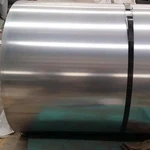


Stainless Steel
Your Leading Stainless Steel Supplier
Xi'an Baohui Steel Co., Ltd. is located in the ancient capital of China, Xi'an. We are a leading manufacturer and supplier of specialty metal materials. Our focus is on providing high-performance stainless steel, titanium alloys, copper alloys, aluminum alloys, and nickel alloys for our customers. Each batch undergoes chemical analysis, mechanical testing, and non-destructive testing to ensure internal and external quality.





Why Choose Us?
Advanced Production Facilities
We operate with modern heating furnaces, cold-rolling and cold-drawing mills, hot-extrusion presses, annealing lines, and full pickling/passivation systems to ensure stable and accurate tube and alloy processing.
Strict Quality Control
All finished tubes and alloy products are tested using eddy-current, ultrasonic, and direct-reading spectrometry to guarantee consistent mechanical performance and full compliance with customer specifications.
Large Capacity and Fast Delivery
With an annual capacity of over 3 million tons and a well-organized stock system, we can quickly support customized orders and meet tight delivery schedules.
Strong Production Market
Our products are exported to over 100 countries, including major markets in the US, Germany, France, Japan, Korea, Brazil, Italy, Turkey, and Southeast Asia, earning long-term trust from global industrial buyers.
Parameters of Stainless Steel
|
Parameter |
Details |
|
Standard |
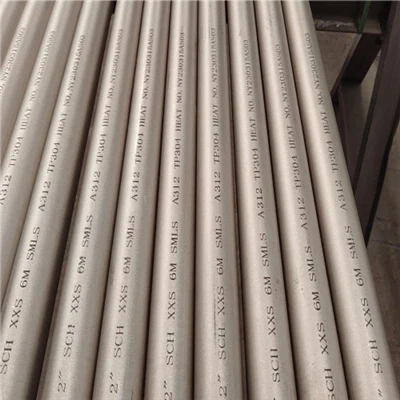
ASTM A312 / ASME SA312 |
|
Grade |
TP304, TP304L |
|
Type |
Seamless (SMLS) / Welded (ERW) |
|
Schedule |
SCH 5S, 10S, 40S, 80S, and others as per ASME B36.19 |
|
Size Range (NPS) |
1/8" to 24" |
|
Outside Diameter (OD) |
10.3 mm to 609.6 mm |
|
Wall Thickness |
As per the specified schedule or customer requirement |
|
Length |
Random (6m), Double Random (12m), or Cut-to-Length |
Stainless Steel Pipe and Tube
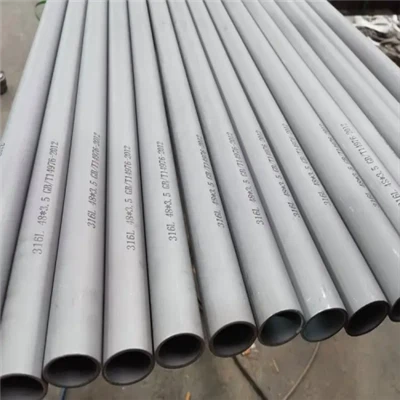
Stainless steel tubes and stainless steel pipes are both cylindrical hollow products. They are typically made from austenitic stainless steel, which known for its chromium and nickel content.
Stainless Steel Plate and Sheet
Stainless steel sheet and plate is an extremely popular steel mill processed product that offers good corrosion resistance for numerous types of applications. Stainless steel sheet and plate products are not heat treatable but offer several popular anti-oxidation qualities.
Stainless Steel Rod and Bar
Stainless steel rods, also known as stainless steel bars, are a type of stainless steel product most commonly used in food, construction, and manufacturing industries. These SS rods are available in various sizes and shapes, like round, square, and hexagonal.
Stainless Steel Pipe Fittings
Stainless Steel Pipe Fittings is used in pipe systems to connect pipe sections, adapt to different sizes or shapes and for other purposes to convey liquid, gas and occasionally solid materials.

Chemical Composition of Stainless Steel
|
Element |
TP304 (%) |
TP304L (%) |
|
Carbon (C) |
0.08 max |
0.030 max |
|
Manganese (Mn) |
2.00 max |
2.00 max |
|
Silicon (Si) |
0.75 max |
0.75 max |
|
Phosphorus (P) |
0.045 max |
0.045 max |
|
Sulfur (S) |
0.030 max |
0.030 max |
|
Chromium (Cr) |
18.00 - 20.00 |
18.00 - 20.00 |
|
Nickel (Ni) |
8.00 - 11.00 |
8.00 - 12.00 |
|
Iron (Fe) |
Balance |
Balance |
Application Industries of Stainless Steel
Stainless Steel in Construction
One of the primary uses of stainless steel is in construction. The material is extensively used for building structures, bridges, and other infrastructural elements. The stainless steel used in construction provides strength and durability, ensuring that buildings can withstand various environmental conditions. Its corrosion resistance enhances longevity, making it a cost-effective option for developers.
Stainless Steel in Household Products
The uses of stainless steel are extensive and include kitchenware, stainless steel has become synonymous with modern kitchens. It is used in everything from sinks and countertops to cookware and utensils. The material's ability to resist staining and its easy-to-clean surface make it ideal for high-use environments. Products like stainless steel refrigerators and ovens add functionality and enhance your kitchen's aesthetic appeal.
Stainless Steel in Medical Equipment
Stainless steel is indispensable in healthcare. It is widely used for surgical instruments, medical devices, and hospital equipment. The non-porous nature of stainless steel allows for thorough sterilization, reducing the risk of infection. Its durability and ease of maintenance make it a favorite in medical settings, where hygiene is paramount.
Stainless Steel in the Automotive Industry
Stainless steel contributes to fuel efficiency and safety in vehicle manufacturing. The combination of manufacturability, fabricability & good mechanical properties allows more efficient designs, while its resistance to corrosion ensures longevity. Many automotive components, from exhaust systems to trim, benefit from the uses of stainless steel, making cars safer and more efficient.
Stainless Steel in the Food Processing Industry
The food processing industry heavily relies on stainless steel for equipment such as mixers, storage tanks, and conveyors. Its widespread use is due to its hygienic properties, resistance to corrosion, and ease of cleaning. Ensuring food safety is paramount, and stainless steel helps meet those standards.
Stainless Steel in Architecture
Architects and designers widely use stainless steel for building cladding, facades, and decorative elements. Its strength and aesthetic versatility allow for innovative designs that can withstand harsh weather while maintaining their appearance.
Stainless Steel in Renewable Energy
Stainless steel uses are not limited to architecture, but they extend into the renewable energy sector as well. In this field, stainless steel is crucial for constructing wind turbines and solar panel structures. Chromium enhances its corrosion resistance, ensuring these installations can withstand harsh weather conditions while maintaining their efficiency and longevity.
Customization Options
|
Material Grade |
201 / 304 / 304L / 316 / 316L / 321 / 409 / 410 / 430 etc. |
ASTM / AISI / EN / DIN standards |
|
Dimensions |
Thickness, OD/ID, width, length |
Thickness: 0.3–60 mm; |
|
Mechanical Properties |
Yield strength, tensile strength, elongation |
Example: 304 → Yield ≥ 205 MPa; |
|
Surface Finish |
2B / BA / No.4 / HL / Mirror / Pickled / Polished |
Roughness (Ra): 0.1–0.6 μm depending on finish |
|
Tolerance Control |
Thickness tolerance, OD/ID tolerance, straightness |
Thickness tolerance: ±0.02–0.1 mm depending on gauge |
|
Edge Type |
Mill edge / Slit edge |
Slit tolerance ≤ ±0.05 mm |
|
Form & Shape |
Coil / Sheet / Plate / Pipe / Tube / Square / Rectangle / Bar |
Coil weight: 2–20 MT; |
|
Welding Type (Pipes/Tubes) |
TIG / Laser / ERW / Seamless |
Weld strength testing per ASTM A249/A269 |
The Manufacturing Process of Stainless Steel
Melting the Raw Materials.
The different stainless steel materials are placed in a furnace (typically an electric furnace for modern stainless steel manufacturing applications) and heated to their melting point.
Removal of Excess Carbon.
The molten material placed into a vacuum oxygen decarburization (VOD) or argon oxygen decarburization (AOD) system to remove excess carbon.
Tuning or Stirring.
To help fine-tune the quality of the final product, the molten steel may be stirred to help distribute and/or remove specific stainless steel components from the mixture.
Forming the Metal.
As the stainless steel begins to cool, it is put through a variety of forming processes—starting with hot rolling while the steel is still above its crystallization temperature. Hot rolling helps get the steel into a rough shape, and is often used to create billets or blooms of metal. To create metal blooms or billets of precise dimensions, the stainless steel may be cold rolled.
Heat Treatment/Annealing.
To relieve internal stresses and alter the stainless steel's mechanical properties, it may be annealed (heated and cooled under controlled conditions). If annealed, the steel may need to be descaled so the protective oxide layer isn't compromised.
Cutting and Shaping.
After the annealing process, stainless steel is put through a variety of cutting and shaping processes to create an ideal final product for the application. The specific operations used to cut the stainless steel will vary depending on the size and shape of the billet/bloom and the desired final product.
Applying Surface Finishes.
The stainless steel manufacturer may apply different surface finishes to their stainless steel billets, blooms, or wires before shipping them to other manufacturers. The specific finish applied will vary depending on the steel's intended use—but one of the most common surface finishes is simply grinding down the surface to remove impurities and make it smoother.
Our Certificates


① Raw Material Inspection – All incoming materials are checked for quality and specification accuracy before production.
② In-Process Inspection – Critical production stages are monitored to maintain stable processes and consistent product quality.
③ Final Product Inspection – Finished products are tested to verify performance and ensure compliance with customer requirements.
④ Pre-Shipment Inspection – Dimensions, surface quality, packaging, and documents are checked prior to dispatch.
⑤ We welcome inspections from any accredited third-party agency upon request.
⑥ We provide cutting, machining, surface finishing, and heat-treatment services to support customized orders.
Packaging & Transportation
Packaging Details:The standard export packaging, plastic film, or craft paper is covered. Awooden case or wooden pallet is adopted to protect products from damage during delivery. In addition, clear labels are tagged on the outside of the packages for easy identification of the products and quality information.
