

Hey there! As a Ti-6Al-4V supplier, I've seen firsthand how different applications demand specific surface finish requirements for this amazing titanium alloy. Ti-6Al-4V, also known as Grade 5 titanium, is super popular because of its high strength, low density, and excellent corrosion resistance. But the surface finish can make or break its performance in various uses. So, let's dive into what those surface finish requirements are in different scenarios.
Aerospace Applications
In the aerospace industry, Ti-6Al-4V is like a rock star. It's used in everything from aircraft frames to engine components. The surface finish here is crucial for several reasons. For starters, a smooth surface reduces aerodynamic drag. When an aircraft is flying at high speeds, even the tiniest bit of extra drag can eat up fuel and reduce efficiency. So, we're talking about a really fine surface finish, often with a roughness average (Ra) in the range of 0.2 to 0.8 micrometers.
Another reason for a smooth finish in aerospace is fatigue resistance. Aircraft components are subjected to repeated stress cycles during flight. A rough surface can act as a stress concentrator, which means it's more likely to develop cracks over time. By having a smooth surface, we can significantly improve the fatigue life of the parts.

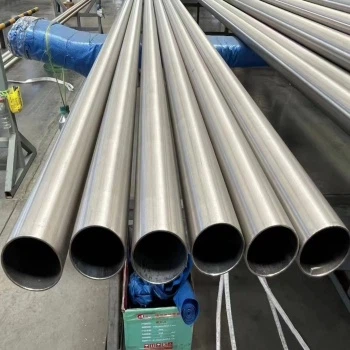
For example, turbine blades made from Ti-6Al-4V need to have a precise surface finish. Any imperfections on the blade surface can disrupt the airflow, leading to reduced engine performance. We use advanced machining and finishing techniques like grinding and polishing to achieve the required surface quality. And when it comes to aerospace parts, we always follow strict industry standards to ensure safety and reliability. If you're interested in aerospace-grade Ti-6Al-4V products, you can check out ASTM B337 Titanium Seamless Pipe which is commonly used in aerospace hydraulic systems.
Medical Applications
Ti-6Al-4V is also a big deal in the medical field. It's used for things like orthopedic implants, dental implants, and surgical instruments. In medical applications, the surface finish has a huge impact on biocompatibility. The human body is very sensitive to foreign materials, and a rough surface can trigger an immune response. So, we want to create a surface that's as smooth and clean as possible to minimize the risk of rejection.
For orthopedic implants, a surface finish with an Ra of around 0.4 to 1.6 micrometers is often required. This smooth surface allows for better integration with the surrounding bone tissue. It also reduces the risk of infection by making it harder for bacteria to adhere to the implant surface.
Dental implants, on the other hand, may require an even finer surface finish. A smooth surface helps to prevent the accumulation of plaque and bacteria, which can lead to gum disease and implant failure. We use special coatings and treatments to enhance the surface properties of Ti-6Al-4V in medical applications. If you're in the medical industry and looking for high-quality Ti-6Al-4V products, Ti-6Al-4V ELI Titanium Plate is a great option. The "ELI" stands for extra low interstitial, which means it has even better biocompatibility.
Chemical Processing Applications
In the chemical processing industry, Ti-6Al-4V is used because of its excellent corrosion resistance. But the surface finish still matters. A smooth surface is less likely to trap chemicals, which can reduce the risk of corrosion. In chemical processing equipment like heat exchangers and reaction vessels, we typically aim for a surface finish with an Ra of 0.8 to 3.2 micrometers.
A rough surface can create pockets where chemicals can accumulate, leading to localized corrosion. This can weaken the structure of the equipment and reduce its lifespan. By having a smooth surface, we can ensure that the chemicals flow smoothly over the surface, minimizing the risk of corrosion.
For example, in a titanium heat exchanger, a smooth surface finish helps to improve heat transfer efficiency. It allows for better contact between the fluid and the heat exchanger surface, which means more efficient heat exchange. If you're involved in chemical processing and need reliable Ti-6Al-4V products, ASTM B338 Grade 2 Titanium Tubing is a popular choice. It's often used in chemical piping systems.
Automotive Applications
In the automotive industry, Ti-6Al-4V is used in high-performance applications where weight reduction is a key factor. Things like exhaust systems, suspension components, and engine parts can benefit from the use of this alloy. The surface finish requirements in automotive applications can vary depending on the specific part.
For exhaust systems, a smooth surface finish can help to reduce backpressure. This means that the exhaust gases can flow more freely, improving engine performance. We usually aim for a surface finish with an Ra of 0.8 to 1.6 micrometers.
In suspension components, a smooth surface finish can reduce friction and wear. This helps to improve the durability and performance of the suspension system. We use precision machining and finishing techniques to achieve the required surface quality.
How We Achieve the Right Surface Finish
As a Ti-6Al-4V supplier, we have a range of techniques at our disposal to achieve the right surface finish for different applications. Machining processes like turning, milling, and drilling are often the first step. These processes can remove material and create the basic shape of the part. But they usually leave a relatively rough surface.
To get a smoother surface, we use finishing processes like grinding, polishing, and lapping. Grinding uses abrasive wheels to remove small amounts of material and create a fine surface finish. Polishing uses abrasive compounds to further smooth the surface and give it a shiny appearance. Lapping is a very precise finishing process that can achieve extremely fine surface finishes.
We also use chemical treatments and coatings to enhance the surface properties of Ti-6Al-4V. For example, a passivation treatment can improve the corrosion resistance of the alloy. And a ceramic coating can provide additional wear resistance.
Contact Us for Your Ti-6Al-4V Needs
If you're looking for high-quality Ti-6Al-4V products with the right surface finish for your specific application, we're here to help. We have the expertise and experience to meet your requirements. Whether you're in the aerospace, medical, chemical processing, or automotive industry, we can provide you with the perfect Ti-6Al-4V products. Don't hesitate to reach out and start a conversation about your procurement needs.
References
- "Titanium: A Technical Guide" by John C. Williams
- "Materials Science and Engineering: An Introduction" by William D. Callister Jr. and David G. Rethwisch
- Industry standards and specifications for aerospace, medical, chemical processing, and automotive applications.


