

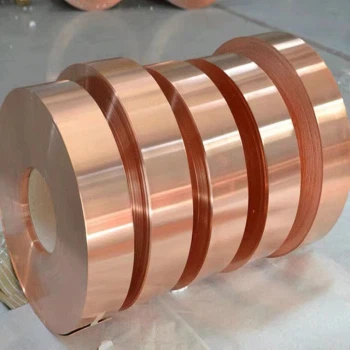
As a trusted supplier of C26800, a widely used brass alloy known for its excellent formability, corrosion resistance, and electrical conductivity, I often receive inquiries from customers about the best cutting tools for machining this material. In this blog post, I'll share my insights based on years of experience in the industry to help you make informed decisions when machining C26800.
Understanding C26800
Before delving into the best cutting tools, it's important to understand the properties of C26800. This alloy, also known as cartridge brass, is composed mainly of copper and zinc, with a typical copper content of around 65% and zinc making up the rest. Its combination of properties makes it suitable for a wide range of applications, including electrical components, fasteners, and decorative items.
C26800 has good machinability due to its relatively soft nature compared to some other metals. However, it also has a tendency to form built - up edges on cutting tools, which can affect the surface finish of the machined parts and reduce tool life. Therefore, choosing the right cutting tools is crucial to achieve high - quality machining results.

High - Speed Steel (HSS) Cutting Tools
High - speed steel is a traditional choice for cutting tools and has been used in machining for many years. HSS tools are relatively inexpensive and offer good versatility. They can withstand moderate cutting speeds and feeds, making them suitable for general machining operations on C26800.
One of the advantages of HSS tools is their ability to be resharpened multiple times, which can be cost - effective in the long run. However, HSS tools have limitations when it comes to high - speed machining. They tend to lose their hardness at elevated temperatures, which can lead to rapid tool wear.
For simple turning, milling, and drilling operations on C26800, HSS end mills, drills, and turning inserts can be a viable option. They can produce acceptable surface finishes and are easy to work with, especially for small - scale production or prototyping.
Carbide Cutting Tools
Carbide cutting tools are becoming increasingly popular for machining C26800 due to their superior performance. Carbide is a very hard material that can maintain its hardness at high temperatures, allowing for much higher cutting speeds and feeds compared to HSS tools.
Carbide turning inserts are excellent for high - speed turning operations on C26800. They can achieve very smooth surface finishes and have a longer tool life. The high cutting speeds also result in shorter machining times, which can increase productivity.
In milling operations, carbide end mills can handle aggressive cutting parameters. They are available in various geometries, such as square - end, ball - end, and corner - radius end mills, which can be selected according to the specific machining requirements. Carbide drills are also very effective for drilling holes in C26800, providing clean and accurate holes with minimal burring.
However, carbide tools are more expensive than HSS tools, and they require more careful handling. They are also more brittle, so they may break if subjected to excessive shock or vibration during machining.
Coated Cutting Tools
Coated cutting tools are another option to consider when machining C26800. Coatings can enhance the performance of both HSS and carbide tools.
For HSS tools, titanium nitride (TiN) coating is a common choice. TiN coating increases the hardness of the tool surface, reduces friction, and improves wear resistance. It can also prevent the formation of built - up edges on the tool, resulting in better surface finishes on the machined parts.
Carbide tools can be coated with more advanced coatings such as titanium aluminum nitride (TiAlN) or diamond - like carbon (DLC). TiAlN coating offers excellent high - temperature stability and wear resistance, making it suitable for high - speed machining of C26800. DLC coating, on the other hand, provides extremely low friction, which can further reduce tool wear and improve chip evacuation.
Tool Geometry
In addition to the tool material and coating, the geometry of the cutting tool also plays an important role in machining C26800. For turning operations, tools with a positive rake angle can reduce cutting forces and improve chip formation. A sharp cutting edge is also essential to minimize the formation of built - up edges.
In milling, end mills with a large helix angle can improve chip evacuation, especially when machining deep pockets or slots in C26800. The number of flutes on the end mill also affects the cutting performance. Fewer flutes are better for roughing operations, as they allow for larger chip loads, while more flutes are suitable for finishing operations to achieve a smoother surface finish.
Considerations for Specific Machining Operations
Turning
When turning C26800, it's important to use the appropriate cutting speed and feed rate. A general guideline is to start with a moderate cutting speed and gradually increase it while monitoring the tool wear and surface finish. For rough turning, a higher feed rate can be used to remove material quickly, while a lower feed rate is recommended for finishing to achieve a smooth surface.
Using a coolant or lubricant during turning can also help reduce heat generation and improve chip evacuation. Water - soluble coolants are commonly used for machining C26800, as they can effectively cool the cutting zone and prevent the formation of built - up edges.
Milling
In milling operations, the choice of milling strategy can also impact the machining results. Climb milling is often preferred when machining C26800, as it can provide a better surface finish and reduce the load on the cutting tool. However, it requires a rigid machine tool and proper workholding to prevent chatter.
When using carbide end mills for milling, it's important to select the right cutting parameters based on the tool diameter, number of flutes, and the depth of cut. High - speed milling techniques can be employed to increase productivity, but they also require careful consideration of the tool's ability to withstand the high cutting forces.
Drilling
Drilling C26800 requires sharp drills with proper point geometry. A drill with a 118 - degree point angle is commonly used for general drilling operations. It's important to use a peck - drilling technique, especially when drilling deep holes, to break the chips and prevent them from clogging the drill flutes.
Using a drill with a coolant hole can also improve the drilling performance by providing better cooling and lubrication at the cutting edge. This can reduce the risk of drill breakage and improve the quality of the drilled holes.
Conclusion
In conclusion, both high - speed steel and carbide cutting tools have their own advantages and disadvantages when it comes to machining C26800. For general and low - volume machining, HSS tools can be a cost - effective option. However, for high - speed and high - precision machining, carbide cutting tools, especially those with advanced coatings, are the preferred choice.
As a supplier of C26800, I understand the importance of providing comprehensive support to our customers. If you are looking for more information on machining C26800 or need assistance in choosing the right cutting tools, please feel free to contact us for procurement and further discussions. We are committed to helping you achieve the best machining results with our high - quality C26800 alloy.
When considering other copper alloys, you may also be interested in UNS C11000 Copper, C17300 Beryllium Copper, and C68700 Aluminum Brass. Each of these alloys has its own unique properties and machining requirements.
References
- "Machining of Metals: An Introduction" by John A. Schey
- "Cutting Tool Technology" by Peter Childs
- Industry - specific technical papers on brass machining from leading tool manufacturers


