

When it comes to selecting stainless steel plates and sheets, one crucial factor that often gets overlooked is their antibacterial properties. In various industries, especially those related to food processing, healthcare, and hospitality, having stainless steel products with good antibacterial capabilities is essential for maintaining hygiene and preventing the spread of harmful bacteria. As a trusted stainless steel plate and sheet supplier, I've delved deep into the world of different grades of stainless steel to understand which ones offer better antibacterial properties.
Understanding Antibacterial Properties in Stainless Steel
Antibacterial stainless steel is designed to inhibit the growth and reproduction of bacteria on its surface. This is achieved through various methods, such as adding specific alloying elements or applying special surface treatments. The effectiveness of antibacterial stainless steel is typically measured by its ability to reduce the number of bacteria on its surface over a certain period.
Grades of Stainless Steel with Good Antibacterial Properties
410 Stainless Steel Plate
410 Stainless Steel Plate is a martensitic stainless steel that contains around 11.5 - 13.5% chromium. It offers good corrosion resistance and mechanical properties. In terms of antibacterial properties, 410 stainless steel can be enhanced through surface treatments. For example, some manufacturers use a process called ion implantation to introduce antibacterial elements such as copper or silver into the surface layer of the steel. These elements can then release ions that have a bactericidal effect on the surface of the steel.
The antibacterial mechanism of 410 stainless steel with ion - implanted antibacterial elements is based on the fact that the released metal ions can interact with the cell membranes and proteins of bacteria. This interaction disrupts the normal physiological functions of bacteria, leading to their death. In food processing environments, 410 stainless steel plates with antibacterial properties can help prevent the growth of bacteria such as E. coli and Staphylococcus aureus, which are common food - borne pathogens.
S31008 Stainless Steel Plate
310S Stainless Steel Plate is an austenitic stainless steel with high chromium (24 - 26%) and nickel (19 - 22%) content. It is known for its excellent high - temperature resistance and corrosion resistance. Although S31008 is not typically thought of as an antibacterial grade by default, some advanced manufacturing techniques can be used to impart antibacterial properties to it.
One approach is to coat the surface of the S31008 stainless steel plate with an antibacterial film. This film can be made of materials such as titanium dioxide (TiO₂) with photocatalytic properties. When exposed to light, TiO₂ can generate reactive oxygen species (ROS) on the surface of the steel. These ROS can oxidize and destroy the cell membranes of bacteria, thereby achieving an antibacterial effect. In healthcare settings, S31008 stainless steel plates with antibacterial coatings can be used in medical equipment and facilities to reduce the risk of cross - contamination.
ASTM A240 TP 316L Stainless Steel Plates
ASTM A240 TP 316L Stainless Steel Plates are a popular choice in many industries due to their excellent corrosion resistance, especially in chloride - containing environments. 316L is an austenitic stainless steel with a low carbon content and the addition of molybdenum (2 - 3%). To enhance its antibacterial properties, manufacturers can add copper to the alloy composition.
Copper - containing 316L stainless steel has been shown to have significant antibacterial activity. Copper ions can penetrate the cell walls of bacteria and interact with their DNA and enzymes, leading to the inhibition of bacterial growth and reproduction. In the food service industry, ASTM A240 TP 316L stainless steel plates with copper - enhanced antibacterial properties can be used in kitchen equipment, countertops, and storage containers to maintain a clean and hygienic environment.
Factors Affecting Antibacterial Performance
Surface Finish
The surface finish of stainless steel plates and sheets plays a crucial role in their antibacterial performance. A smooth surface is less likely to harbor bacteria compared to a rough surface. Polished or mirror - finished stainless steel has fewer crevices and pores where bacteria can adhere and grow. Therefore, when selecting stainless steel with antibacterial properties, it is advisable to choose products with a smooth surface finish.
Environmental Conditions
The antibacterial performance of stainless steel can also be affected by environmental conditions such as temperature, humidity, and the presence of other substances. For example, in high - humidity environments, bacteria may be more likely to survive and grow on the surface of the steel. Additionally, the presence of organic matter or other contaminants can interfere with the antibacterial action of the steel. Regular cleaning and maintenance are essential to ensure the long - term effectiveness of the antibacterial properties.
Contact Time
The contact time between bacteria and the stainless steel surface also affects the antibacterial performance. In general, the longer the contact time, the greater the reduction in the number of bacteria. However, different grades of stainless steel may have different contact time requirements to achieve a significant antibacterial effect.
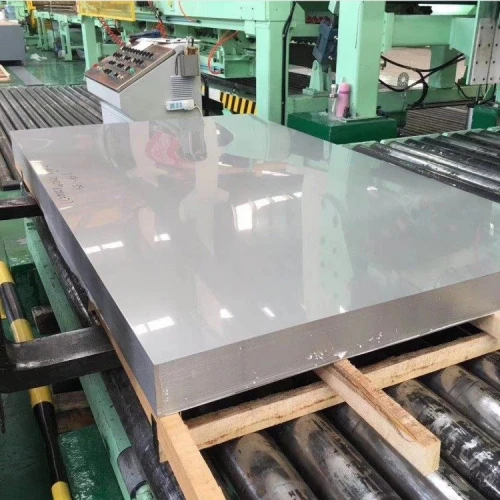

Applications of Antibacterial Stainless Steel Plates and Sheets
Food Processing Industry
In the food processing industry, antibacterial stainless steel plates and sheets are used in a wide range of applications, including food storage tanks, conveyor belts, and processing equipment. By using stainless steel with good antibacterial properties, food manufacturers can reduce the risk of food contamination and ensure the safety of their products.
Healthcare Industry
In healthcare facilities, antibacterial stainless steel is used in medical equipment, operating rooms, and patient rooms. It helps prevent the spread of hospital - acquired infections and maintains a clean and sterile environment. For example, antibacterial stainless steel can be used in surgical instruments, bed frames, and wall panels.
Hospitality Industry
In the hospitality industry, antibacterial stainless steel plates and sheets are used in kitchens, restaurants, and hotels. They are used in countertops, sinks, and food service equipment to provide a hygienic environment for guests.
Conclusion
As a stainless steel plate and sheet supplier, I understand the importance of providing products with good antibacterial properties. Grades such as 410, S31008, and ASTM A240 TP 316L can be enhanced to have excellent antibacterial capabilities through various methods. When selecting stainless steel for applications where hygiene is a priority, it is essential to consider factors such as surface finish, environmental conditions, and contact time.
If you are in need of high - quality stainless steel plates and sheets with antibacterial properties, I invite you to contact me for more information and to discuss your specific requirements. Our team of experts is ready to assist you in finding the perfect solution for your needs.
References
- "Antibacterial Stainless Steel: A Review of the Mechanisms and Applications" by X. Zhang, Y. Wang, and Z. Li.
- "Surface Modification of Stainless Steel for Antibacterial Applications" by J. Smith and A. Brown.
- "The Effect of Alloying Elements on the Antibacterial Properties of Stainless Steel" by R. Johnson and M. Davis.


