

Hey there! As a supplier of C26000, I often get asked about how to join C26000 with other metals. Well, you've come to the right place! In this blog, I'm gonna walk you through the ins and outs of joining C26000 with different metals, and share some tips and tricks from my experience in the industry.
First off, let's talk a bit about C26000. It's a popular brass alloy, known for its good formability, corrosion resistance, and attractive yellow - gold color. C26000 is widely used in various applications, from electrical components to decorative items. But when you need to combine it with other metals to create more complex structures or products, there are several methods you can choose from.
Soldering
Soldering is one of the most common ways to join C26000 with other metals. It's a process where you use a filler metal, called solder, with a melting point lower than the base metals. The solder melts and flows into the joint by capillary action, creating a strong bond when it cools.
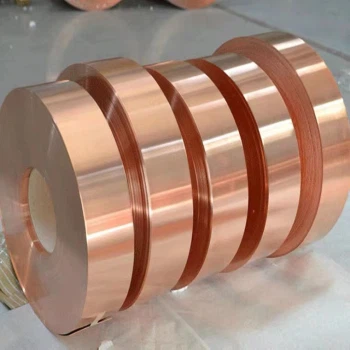

When soldering C26000, you need to make sure the surfaces are clean and free of dirt, grease, and oxides. You can use a wire brush or sandpaper to clean the surfaces, and then apply a flux. A flux helps to remove any remaining oxides and promotes the wetting of the solder on the metal surfaces.
For joining C26000 with other brass alloys like C26800 Brass, you can use a general - purpose brass solder. The melting point of the solder should be carefully chosen to ensure it melts and flows well without over - heating the base metals.
If you're joining C26000 with copper, such as UNS C11000 Copper, a silver - bearing solder is often a good choice. Silver - bearing solders offer good strength and excellent electrical conductivity, which is important in many electrical applications.
Brazing
Brazing is similar to soldering, but it uses a filler metal with a higher melting point (above 450°C or 842°F). This results in a stronger joint compared to soldering.
Just like in soldering, surface preparation is crucial in brazing. You need to clean the surfaces of C26000 and the other metal thoroughly. Then, apply a brazing flux to prevent oxidation during the heating process.
When brazing C26000 with other metals, you can use different types of filler metals depending on the application. For example, a brass - based filler metal can be used for joining with other copper - based alloys. The heating source can be a torch or a furnace, and the key is to heat the joint evenly to ensure proper flow of the filler metal.
Brazed joints are often used in plumbing, where high - strength and leak - proof connections are required. For instance, if you're making a plumbing fixture by joining C26000 components with copper pipes, brazing would be a great option.
Welding
Welding is a more intensive method of joining metals compared to soldering and brazing. It involves melting the base metals themselves at the joint, and sometimes adding a filler metal to enhance the strength of the joint.
There are different welding techniques that can be used to join C26000 with other metals. TIG (Tungsten Inert Gas) welding is a popular choice. It provides precise control over the heat input, which is important when working with C26000 to avoid over - heating and distortion.
When welding C26000 with C17500 Beryllium Copper, for example, you need to be extra careful. Beryllium copper has its own unique properties, and the welding process needs to be adjusted accordingly. You may need to use a specific filler metal and follow strict safety procedures due to the potential health risks associated with beryllium.
Another welding method is MIG (Metal Inert Gas) welding. It's a faster process than TIG welding and can be suitable for joining larger pieces of C26000 with other metals. However, it also requires more skill to control the heat and the deposition of the filler metal.
Mechanical Fastening
If you don't want to use heat - based methods like soldering, brazing, or welding, mechanical fastening is an alternative option. This includes using screws, bolts, nuts, and rivets to join C26000 with other metals.
The advantage of mechanical fastening is that it's easy to disassemble and reassemble the joint if needed. You just need to drill holes in the appropriate places on the C26000 and the other metal, and then insert the fasteners.
However, mechanical joints may not be as strong or as leak - proof as joints created by soldering, brazing, or welding. They also require more space and can add extra weight to the structure.
Adhesive Bonding
Adhesive bonding is a relatively new method for joining metals. It involves using a special adhesive to bond C26000 with other metals. The adhesive creates a strong bond by chemical or physical means.
The key to successful adhesive bonding is proper surface preparation. The surfaces need to be clean, dry, and sometimes roughened to improve the adhesion. There are different types of adhesives available, such as epoxy adhesives and cyanoacrylate adhesives.
Epoxy adhesives are known for their high strength and good resistance to chemicals and heat. They can be used for a wide range of applications, from joining small parts in electronics to large structural components. Cyanoacrylate adhesives, on the other hand, are fast - curing and can provide a quick bond, but they may not be as strong as epoxy adhesives in some cases.
In conclusion, there are several ways to join C26000 with other metals, each with its own advantages and disadvantages. The choice of method depends on the specific application, the properties of the other metal, and the requirements for the joint, such as strength, conductivity, and appearance.
If you're in the market for C26000 or have any questions about joining it with other metals, don't hesitate to reach out. I'm here to help you make the right choices for your projects. Whether you're a small - scale hobbyist or a large - scale manufacturer, we can provide you with high - quality C26000 materials and expert advice on metal joining. Start a conversation with us to discuss your requirements and explore the possibilities of working with C26000.
References
- ASM Handbook, Volume 6: Welding, Brazing, and Soldering
- Metals Handbook Desk Edition, 3rd Edition
- Technical Bulletins from various metal manufacturers


