

In daily life, stainless steel products are everywhere-from the thermoses we use every day and kitchen countertops to building door frames. But did you know that seemingly identical stainless steels actually have significant compositional differences? Among them, 304 and 316 stainless steel are the two most common types, and their compositional differences directly determine their durability and suitable applications.
But don't assume stainless steel has only one composition. The most common are 304 and 316. Their differing compositions determine the stainless steel's durability, so be careful not to buy the wrong one. So, when comparing 304 and 316 stainless steel, which one is better? Let me explain!
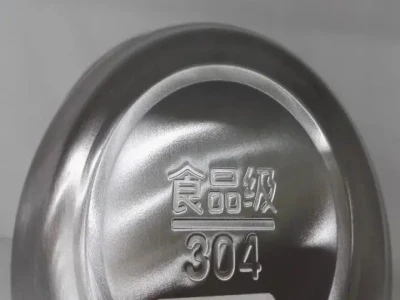
Introduction to 304 and 316 Stainless Steel
Among stainless steel compositions, 304 and 316 are the most widely used. They can be used for the inner lining of thermos bottles, as well as for various cookware and equipment. They are food-grade materials, making them perfectly safe for everyday use.
304 stainless steel contains approximately 18% chromium and over 8% nickel. 316 stainless steel builds on this by adding 2% molybdenum, resulting in superior corrosion resistance.
Other grades like the 201 series and 430 series exist, but their quality and advantages are significantly inferior to the two mentioned above, leading to lower usage rates.
Differences Between 304 and 316 Stainless Steel
Given the similar compositions of 304 and 316, what distinguishes them? I consulted an experienced craftsman, who provided three key differences:
1. Corrosion Resistance
As mentioned earlier, 316 stainless steel contains molybdenum, enhancing its corrosion resistance and improving acid and alkali tolerance.
304 stainless steel lacks molybdenum, resulting in inferior corrosion resistance and acid/alkali tolerance compared to 316.
2. Different Application Fields
Although both are food-grade materials, their application fields differ. For instance, 316 stainless steel, with its superior corrosion resistance, is widely used in medical devices.
Meanwhile, 304 stainless steel is extensively used in cookware, tableware, and other applications. Our household stainless steel countertops, frying pans, and cutlery all utilize 304.
3. Price Differences
Purchasing 316 stainless steel costs over 20,000 yuan per ton, while 304 ranges between 15,000 to 20,000 yuan per ton, making 316 significantly more expensive.
However, 316's higher price reflects its superior performance-you get what you pay for.
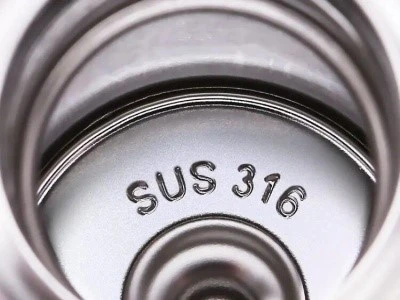
Which is better: 304 or 316?
① For cost-effectiveness, opt for 304 stainless steel. It offers corrosion resistance, excellent toughness, and high-temperature tolerance, meeting most daily needs.
② If frequently used for milk, coffee, or similar beverages, choose 316 stainless steel. Milk and coffee are highly corrosive and can degrade 304 over time.
③ For a higher-quality thermos, choose one with a 316 stainless steel inner liner and a 304 or 201 stainless steel outer shell.
Note that 316 stainless steel is softer. When cleaning the inner liner, use a sponge brush. Harsher materials may leave scratches.
To summarize
Purely in terms of material properties, 316 outperforms 304 with superior corrosion resistance and acid/alkali tolerance. However, 304 offers better value for money.
When selecting 304 or 316 stainless steel products, base your decision on your specific usage environment-avoid overspending just for the sake of higher grades.
Need expert advice? Contact us immediately!
Let our technical team provide the most suitable 304 and 316 stainless steel solutions, helping you make optimal choices within your budget.
WhatsApp: +86 13468954786
Email: baohui@bhsteelpipe.com


