

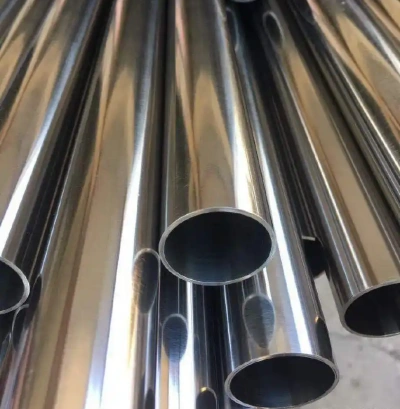
TP304 austenitic stainless steel is a type of stainless steel exhibiting an austenitic microstructure at room temperature. It corresponds to the American standard designation for 304 stainless steel, featuring extensive industrial applications and outstanding comprehensive properties. The following provides a detailed introduction:
I. Chemical Composition and Properties
Chemical Composition: TP304 stainless steel primarily contains approximately 18% chromium (Cr), 8%–11% nickel (Ni), along with trace amounts of carbon (C, ≤0.08%), silicon (Si, ≤1.00%), manganese (Mn, ≤2.00%), phosphorus (P, ≤0.045%), and sulfur (S, ≤0.030%). This composition confers exceptional corrosion resistance and mechanical properties to TP304 stainless steel.
Characteristics:
Corrosion Resistance: TP304 stainless steel resists corrosion in air or chemical corrosive media, particularly in oxidizing environments such as dilute sulfuric acid, dilute nitric acid at room temperature, and most organic acids and inorganic salt solutions.
Mechanical Properties: Exhibits good mechanical strength, machinability, and weldability, capable of withstanding elevated temperatures and pressures.
Physical Properties: Non-magnetic with high toughness and ductility, though relatively low strength. Cannot be strengthened through phase transformation; hardening is achieved solely via cold working.
II. Production Process
The production process for TP304 austenitic stainless steel primarily involves the following steps:
Raw Material Preparation: Select high-quality TP304 stainless steel plates or round bars as raw materials to ensure the finished steel pipes meet standards for chemical composition and mechanical properties.
Melting and Casting: Melt the raw materials at high temperatures to form uniform molten steel, then cast into billets.
Hot Rolling and Piercing: Heat the billets to an appropriate temperature and pierce them using a piercing machine to form hollow tube blanks.
Cold Drawing or Cold Rolling: For seamless tubes requiring higher precision and surface quality, cold drawing or cold rolling is performed to further refine the grain structure, enhancing dimensional accuracy and surface finish.
Heat Treatment: To relieve processing stresses and improve mechanical properties and corrosion resistance, the finished tubes undergo solution treatment or stabilization treatment.
Pickling and Passivation: Acid pickling removes scale and impurities from the tube surface, while passivation forms a thin, dense, and hard passivation film on both inner and outer walls, enhancing cleanliness and durability.
Inspection and Testing: Finished tubes undergo hydrostatic pressure testing, eddy current testing, ultrasonic testing, and other inspections to ensure compliance with relevant standards.
III. Application Fields
TP304 austenitic stainless steel demonstrates extensive application value across multiple sectors due to its unique properties:
Petrochemical Industry: Used for transporting corrosive media such as petroleum, natural gas, and chemical feedstocks, ensuring pipeline system safety and reliability.
Food Processing: Employed in manufacturing pipelines, containers, and conveying systems within food processing equipment to guarantee food hygiene and safety. Its smooth surface facilitates easy cleaning and resists dirt accumulation and bacterial growth.
Medical Industry: Preferred for manufacturing medical instruments like surgical tools and IV tubing due to its corrosion resistance and non-toxic properties.
Architectural Decoration: Used in high-end building interiors and exteriors-such as handrails, balustrades, and decorative pipes-enhancing aesthetics and durability.
Aerospace: Used in manufacturing structural components and piping systems for aircraft, rockets, and other aerospace vehicles, requiring high strength, lightweight properties, and superior corrosion resistance.
IV. Standards and Identification
Standards: The primary standards for TP304 austenitic stainless steel include ASTM A312 and ASTM A213, as well as ASME A312 and ASME A213. These standards specify requirements for chemical composition, mechanical properties, dimensional tolerances, and other characteristics of the steel pipe.
Marking: Common market identifiers for TP304 stainless steel include 06Cr19Ni10 (Chinese National Standard), S30408 (ASTM Standard), and SUS304 (Japanese Standard).
Differences Between TP304 and Other Stainless Steels
TP304 is often confused with TP316, yet they exhibit distinct differences in composition and performance:
- Composition: TP316 contains 2%-3% molybdenum, while TP304 does not. Molybdenum significantly enhances TP316's corrosion resistance in chloride environments (e.g., seawater).
- Price: Due to molybdenum's higher cost, TP316 typically costs 30%-50% more than TP304.
- Application Scenarios: TP304 suffices for general environments, while TP316 is more suitable for coastal or highly corrosive chemical settings.
TP304 Selection and Maintenance
When selecting TP304 materials or products, consider the following:
- Verify Material Composition: Some low-cost products may be mislabeled as TP304. Use spectroscopic analysis or professional testing for confirmation.
- Surface Treatment: Select appropriate surface finishes like polishing, sandblasting, or brushing based on the usage environment to enhance aesthetics and corrosion resistance.
- Routine Maintenance: Although TP304 is corrosion-resistant, prolonged exposure to salt, strong acids, or alkalis may cause rust. Prompt cleaning and drying after use extends its service life.
Market Status of TP304
As one of the most widely used stainless steels, TP304 enjoys substantial market demand. In recent years, its application scope has expanded further with industrial development and rising living standards. Pricing is significantly influenced by nickel price fluctuations, with current market rates for TP304 fluctuating between 15,000 and 20,000 RMB per ton.
In summary, TP304 austenitic stainless steel is a well-balanced stainless steel material with broad applicability. Its presence is ubiquitous in both everyday items and industrial equipment. Understanding its characteristics and suitable applications enables more informed selection and utilization of this material.
Email:baohui@bhsteelpipe.com
WhatsApp:8613468954786
Tel:+8613572553287


