

TiAl6V4 (International designation; also known as TC4 in China and Ti-6Al-4V per ASTM F136) is the most widely used α+β titanium alloy globally, renowned as the "workhorse titanium alloy." It accounts for over 50% of total titanium alloy consumption worldwide. Offering a strength-to-weight ratio approximately three times that of stainless steel at just over half the density (about 4.5 g/cm³), it combines exceptional corrosion resistance and excellent biocompatibility. It is extensively utilized in critical aerospace engine components, medical implants, and high-performance sporting goods. However, attention is required regarding its susceptibility to oxidation above 400°C and the risk of stress corrosion cracking in fluoride-containing environments.
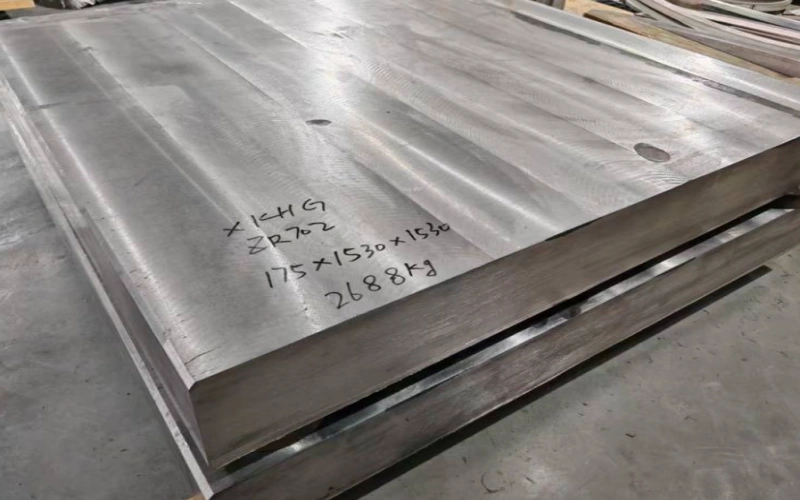
Core Advantages of Ti-6Al-4V
The success of TiAl6V4 stems from its unparalleled balance of properties:
- Excellent Specific Strength: It boasts a strength-to-density ratio significantly higher than most steels and aluminum alloys, making it a premier choice for weight reduction.
- Superior Corrosion Resistance: It offers outstanding resistance to seawater, chlorides, and various acidic/alkaline media, often outperforming stainless steels.
- Proven Biocompatibility: It is non-toxic, non-magnetic, and non-allergenic, establishing itself as a gold-standard material for many orthopedic and dental implants.
- Good Process Versatility: It can be formed through various methods, including forging, welding, and additive manufacturing, accommodating complex component designs.
In-Depth Analysis
Its outstanding performance is rooted in a precise alloy composition. Aluminum (Al) stabilizes the α phase, while vanadium (V) stabilizes the β phase, resulting in an optimal microstructure.
Chemical Composition
| Element | Content Range | Primary Function |
|---|---|---|
| Aluminum (Al) | 5.5 - 6.8 | α-phase stabilizer; increases strength, heat resistance, and elastic modulus. |
| Vanadium (V) | 3.5 - 4.5 | β-phase stabilizer; improves ductility, toughness, and hot workability. |
| Iron (Fe) | ≤ 0.30 | Impurity element; strictly controlled to prevent local embrittlement. |
| Oxygen (O) | ≤ 0.20 | Interstitial element; significantly increases strength but reduces ductility. |
| Titanium (Ti) | Balance | Base element. |
Mechanical Properties
| Property | Typical Value | Notes |
|---|---|---|
| Tensile Strength | ≥ 895 MPa | High strength, suitable for replacing many high-strength steel components. |
| Yield Strength (0.2% Offset) | ≥ 825 MPa | Excellent resistance to permanent deformation. |
| Elongation | ≥ 10% | Provides sufficient ductility and impact toughness. |
| Hardness (HB) | 293 - 363 | Wear resistance is moderate; surface treatments are often required for enhancement. |
| Elastic Modulus | 110 GPa | Approximately half that of steel; beneficial for reducing component stiffness and matching bone modulus in implants. |
Effect of Heat Treatment: Through solution treatment and aging, tensile strength can exceed 1100 MPa, albeit with some reduction in ductility. The heat treatment regimen can be tailored to specific component service conditions.
Application Areas for TiAl6V4
Its unique property profile makes Ti-6Al-4V dominant in advanced manufacturing sectors.
1. Aerospace (Largest Market Segment)
Engine Components: Compressor blades, discs, and casings, leveraging their high strength and creep resistance at intermediate temperatures (up to ~350°C).
Airframe Structures: Landing gear beams, bulkheads, and fasteners, enabling significant weight savings and improved fuel efficiency.
Spacecraft: Rocket motor cases and satellite frames, meeting requirements for low weight, high strength, and cryogenic capability.
2. Medical Devices (A Critical Material for Life Sciences)
Orthopedic Implants: Hip and knee joint replacements, spinal fixation systems, bone plates, and screws. Its elastic modulus is closer to human bone, helping to reduce "stress shielding" and promote osseointegration.
Dental Implants: Surface modifications such as Sandblasted, Large-grit, Acid-etched (SLA), or anodization significantly enhance bone integration and success rates.
3. Industrial & Energy
Chemical & Marine Engineering: Used in heat exchanger tubes for seawater desalination, electrodes for the chlor-alkali industry, and condenser tubes in coastal power plants, resisting harsh corrosive environments.
Oil & Gas: Components for deep-sea drilling and high-strength corrosion-resistant valves, withstanding environments containing hydrogen sulfide (H₂S).
4. High-End Consumer & Sporting Goods
Sporting Equipment: Premium bicycle frames, golf club heads, and climbing gear, offering high strength, low weight, and good vibration damping.
Consumer Goods: Luxury watch cases and eyewear frames, valued for their lightweight, durability, and hypoallergenic properties.
Key Considerations and Limitations When Using Ti-6Al-4V
Despite its advantages, TiAl6V4 has inherent limitations that must be addressed during design and application:
- High Cost: The entire production chain-from vacuum arc remelting to machining (with cutting speeds roughly one-third of those for steel)-is expensive, which remains a primary constraint for widespread adoption.
- High-Temperature Oxidation: Prolonged exposure in air above 400°C accelerates surface oxidation; protective coatings (e.g., aluminide) are often required.
- Poor Wear Resistance: Its relatively low surface hardness necessitates surface engineering treatments like nitriding or PVD coatings (e.g., TiN) for applications involving friction and wear.
- Specific Corrosion Risks: Potential susceptibility to stress corrosion cracking exists in certain environments, such as those containing fluoride ions (e.g., hydrofluoric acid) or anhydrous methanol; use in such media should be avoided.
Future Outlook
TiAl6V4 is evolving with new manufacturing technologies:
- Additive Manufacturing (3D Printing): TiAl6V4 is the predominant material for metal additive manufacturing (e.g., SLM, EBM). It enables the production of complex, topology-optimized structures unachievable with traditional methods, dramatically improving material efficiency. This is particularly promising for aerospace and patient-specific medical implants.
- Advanced Surface Engineering: Techniques like laser cladding, micro-arc oxidation (MAO), and bioactive coatings can significantly enhance surface wear resistance, corrosion resistance, or impart osteoconductive properties, further expanding their application boundaries.
Conclusion
TiAl6V4 (TC4/Ti-6Al-4V), with its exceptional specific strength, corrosion resistance, and biocompatibility, has firmly established itself as the indispensable "workhorse titanium alloy." Its presence is ubiquitous, from aircraft soaring in the skies to implants within the human body. While challenges related to cost and specific property limitations exist, ongoing material optimization, innovative manufacturing processes, and surface technologies ensure that Ti-6Al-4V will continue to play a critical and irreplaceable role in future high-end manufacturing. A comprehensive understanding of its property profile is key to its correct selection and effective utilization.
Email:baohui@bhsteelpipe.com


