

When it comes to the durability of stainless steel pipe fittings, it's a question that often arises among our customers. As a supplier of stainless steel pipe fittings, I've witnessed firsthand the long - lasting performance of these products in various applications. In this blog, I'll delve into the factors that determine how long stainless steel pipe fittings last and provide insights based on industry knowledge and real - world experience.
1. The Nature of Stainless Steel
Stainless steel is an alloy primarily composed of iron, with a minimum of 10.5% chromium content. The chromium in stainless steel forms a thin, invisible layer of chromium oxide on the surface. This passive layer acts as a shield, protecting the underlying metal from corrosion and oxidation. This inherent property of stainless steel is the foundation for the long - term durability of stainless steel pipe fittings.
For example, in a typical water supply system, stainless steel pipe fittings can resist the corrosive effects of water, even if the water has a certain level of impurities. This is in contrast to other materials like carbon steel, which may rust and deteriorate over time when exposed to moisture.
2. Quality of Manufacturing
The manufacturing process of stainless steel pipe fittings plays a crucial role in determining their lifespan. High - quality manufacturing ensures that the fittings have the right dimensions, smooth surfaces, and proper material composition.
At our facility, we adhere to strict quality control measures. We use advanced manufacturing techniques such as precision forging and machining to produce pipe fittings. For instance, when forging, we ensure that the stainless steel is heated to the optimal temperature and forged with the right pressure to achieve a uniform grain structure. This not only enhances the strength of the fittings but also improves their resistance to cracking and fatigue.

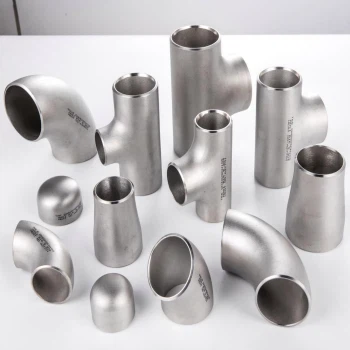
3. Standards and Specifications
Following industry standards is essential for the long - term performance of stainless steel pipe fittings. There are several well - known standards in the industry, such as ASTM A815 Stainless Steel Pipe Fittings, ASTM A403 Stainless Steel Pipe Fittings, and ASTM A182 Stainless Steel Pipe Fittings.
These standards define the chemical composition, mechanical properties, and testing methods for stainless steel pipe fittings. By producing fittings that meet these standards, we can guarantee a certain level of quality and durability. For example, ASTM A403 specifies the requirements for wrought austenitic stainless steel pipe fittings. Fittings manufactured according to this standard are designed to withstand specific pressures and temperatures, which is crucial for their long - term use in various industrial applications.
4. Environmental Factors
The environment in which stainless steel pipe fittings are installed has a significant impact on their lifespan. Different environments present different challenges.
- Corrosive Environments: In chemical plants or coastal areas, the presence of corrosive substances such as acids, salts, and chlorides can accelerate the corrosion process. However, certain grades of stainless steel, such as those with higher molybdenum content, are more resistant to these corrosive agents. For example, in a coastal power plant where the air contains a high level of salt, using stainless steel pipe fittings with a higher molybdenum content can significantly extend their service life.
- Temperature and Pressure: Extreme temperatures and high pressures can also affect the performance of stainless steel pipe fittings. In high - temperature applications, such as in a steam boiler system, the fittings need to maintain their strength and integrity. Similarly, in high - pressure pipelines, the fittings must be able to withstand the internal pressure without leaking or failing.
5. Maintenance and Installation
Proper installation and regular maintenance are key to ensuring the long - term durability of stainless steel pipe fittings.
- Installation: During installation, it's important to follow the correct procedures. For example, the fittings should be properly aligned and tightened to avoid any stress concentration. Using the right tools and techniques can prevent damage to the fittings during installation. If the fittings are not installed correctly, it can lead to premature failure, such as leakage or cracking.
- Maintenance: Regular inspection and maintenance can help detect and address any potential issues early. This may include checking for signs of corrosion, leaks, or mechanical damage. Simple maintenance tasks like cleaning the fittings to remove any dirt or debris can also prevent the accumulation of corrosive substances on the surface.
6. Typical Lifespan
Under normal operating conditions and with proper installation and maintenance, stainless steel pipe fittings can last for several decades. In many cases, they can have a service life of 20 - 50 years or even longer.
For example, in a residential plumbing system, stainless steel pipe fittings can last for the entire lifespan of the building. In industrial applications, if the fittings are used in a relatively mild environment and are well - maintained, they can continue to function effectively for a long time.
7. Conclusion and Call to Action
In conclusion, the lifespan of stainless steel pipe fittings is influenced by multiple factors, including the nature of stainless steel, manufacturing quality, standards compliance, environmental factors, and maintenance. As a supplier, we are committed to providing high - quality stainless steel pipe fittings that meet or exceed industry standards.
If you are in the market for stainless steel pipe fittings and want products that offer long - term durability, we'd love to have a discussion with you. Whether you have a small - scale residential project or a large - scale industrial application, we can provide the right solutions for your needs. Reach out to us to start a conversation about your requirements and how our stainless steel pipe fittings can benefit your project.
References
- ASM Handbook Committee. (2004). ASM Handbook Volume 13A: Corrosion: Fundamentals, Testing, and Protection. ASM International.
- ASTM International. (2019). ASTM Standards for Stainless Steel Pipe Fittings. ASTM International.
- Schmitt, R. (2018). Stainless Steel in Construction: Properties, Design, and Applications. Wiley - VCH.
